We stop water from getting into your basement for good. Permanent solutions — not temporary fixes.
I'm Ready For A Free Quote
Thank You For Your Submission!
A team member will be reaching out to you shortly.





If you notice any of these, water is already finding a way in.
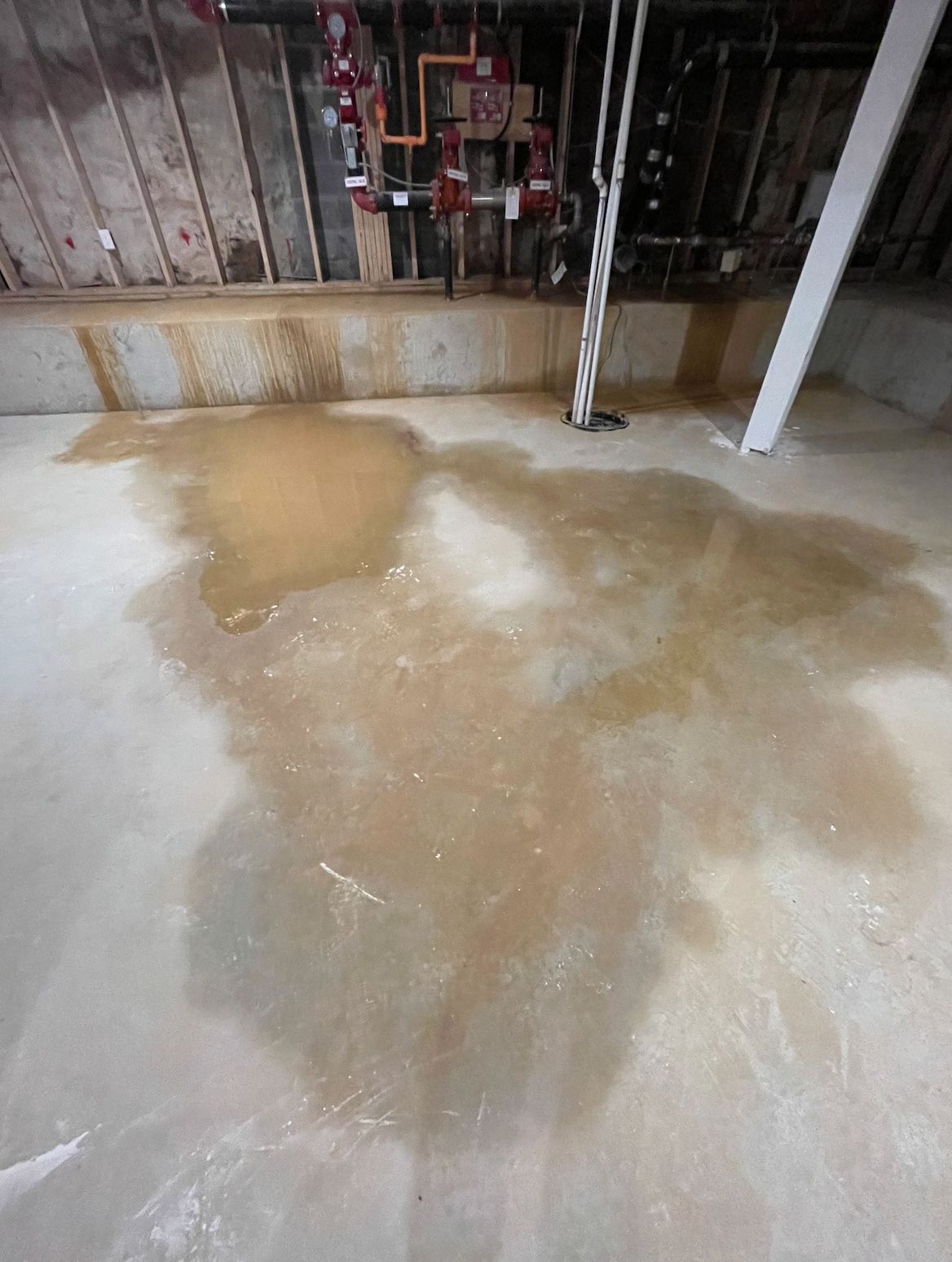
Puddles or a thin layer of water after a storm means water is pushing through your foundation. It won't stop on its own — every rain makes it worse.
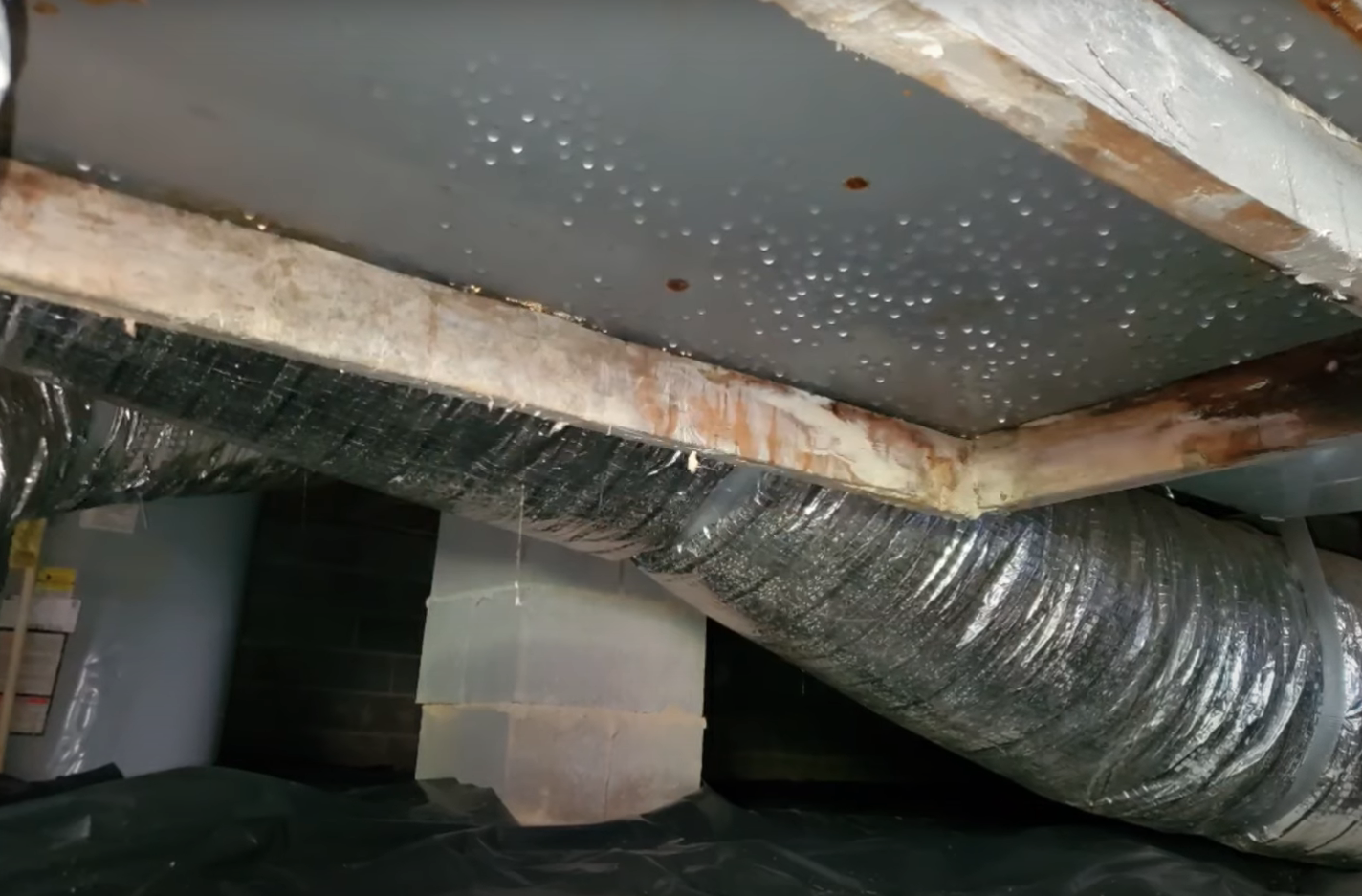
That white, chalky buildup is called efflorescence. It's minerals left behind when water pushes through concrete and evaporates. It means moisture is moving through your walls constantly.
That damp, earthy odor is moisture feeding mold you may not even see yet. It spreads through the house and affects the air your family breathes every day.
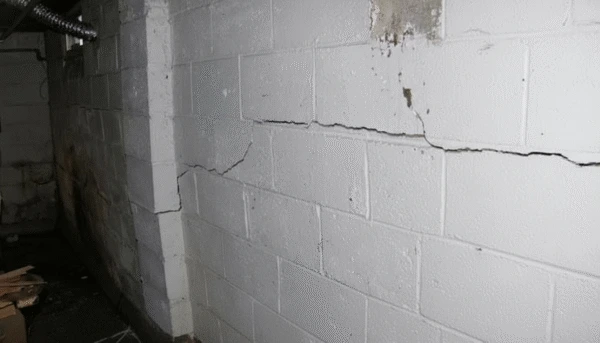
A crack in a poured or block wall gives water a direct path inside. Small cracks grow — freeze-thaw cycles and water pressure widen them every season.
Water gets into basements because the soil around your foundation holds moisture. When it rains or the snow melts, that moisture pushes against your walls and floor. Concrete is porous — it can't hold water back forever. That's the problem. And paint, sealant, or patching cement from the hardware store won't solve it. Those products trap water behind the surface. The pressure stays. The damage continues.
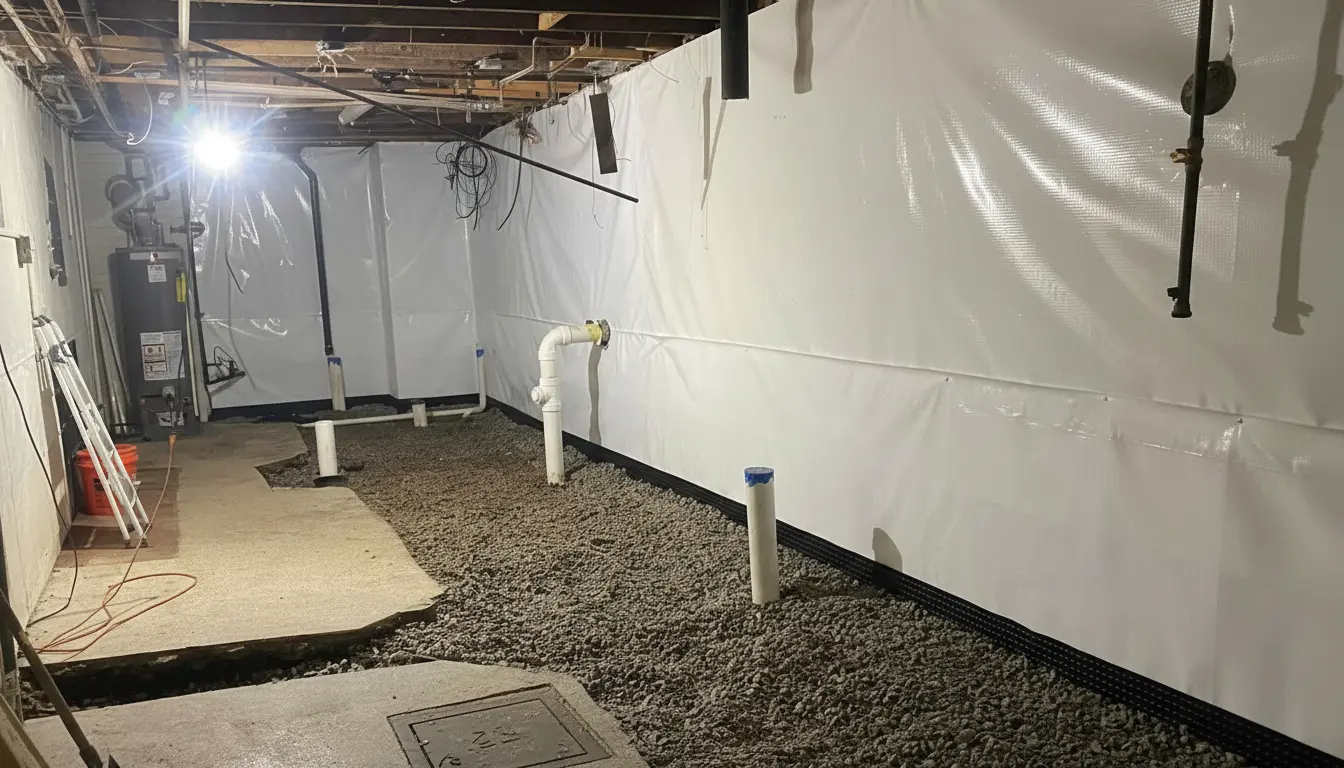
An interior French drain catches water at the point where your wall meets the floor — the most common entry point. We cut a narrow channel along the perimeter, install a perforated drain pipe in a gravel bed, and route it to a sump pump pit. Water that enters gets collected and pumped out before it ever reaches your floor. This is the most effective and affordable systemic fix for basements with hydrostatic pressure or a high water table.
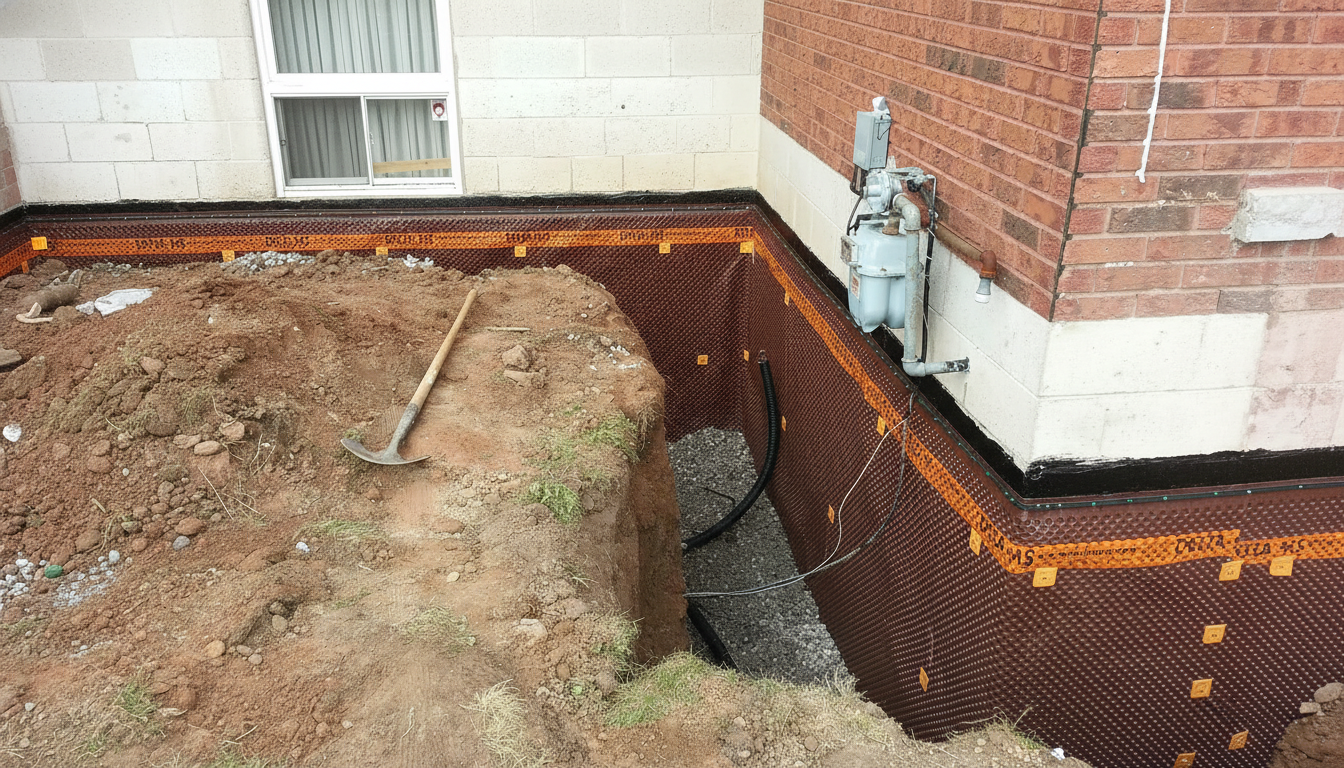
Exterior waterproofing stops water before it touches the inside of your home. We excavate down to the foundation footer, clean the wall, apply a waterproof membrane and drainage board, and install a new footer drain. This protects the wall itself from water damage and deterioration. It's more involved than interior work, but it addresses the source directly.
For isolated cracks in poured concrete walls, we inject epoxy or polyurethane resin directly into the crack. The material fills the full thickness of the wall and seals it from the inside out. Epoxy bonds the crack structurally. Polyurethane stays flexible for walls that still shift slightly. One crack doesn't always mean a full system — but left alone, one crack becomes the start of a bigger problem.
Our Process
We check your entire basement — walls, floor, joints, cracks, and existing systems. Then we walk the outside to look at grading, gutters, and drainage. We explain what we find in plain language so you understand the problem before we talk about solutions.
Every basement is different. We give you a written proposal with the exact scope of work, materials, timeline, and cost. No vague estimates. No surprises. You know exactly what you're paying for before we start.

Our crew installs your system — whether it's an interior drain, exterior membrane, crack injection, or a combination. We protect your space, communicate throughout the job, and clean up when we're done.
We walk you through everything we installed, show you how the system works, and hand you your warranty documentation. You'll know exactly what was done, how to maintain it, and what's covered.
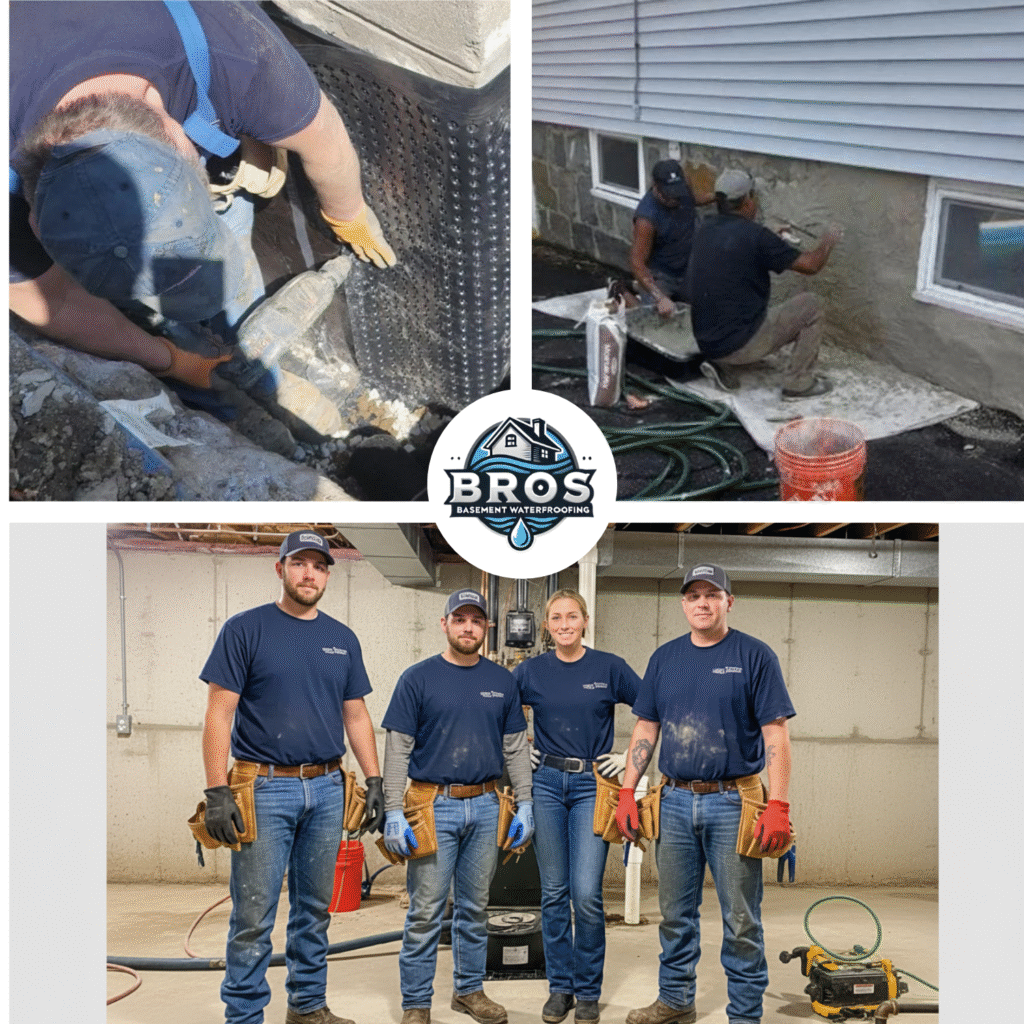
We tell you what your basement needs — and what it doesn't. If a crack injection fixes the problem, we're not going to sell you a full perimeter system. If the issue is your gutters dumping water at the foundation, we'll tell you that before we quote anything else. Straight answers. No pressure. No games.
Every proposal is in writing with a clear scope, cost, and timeline. We don't give ballpark numbers or verbal estimates that change later. The price on your proposal is the price you pay. We also offer financing options that make it possible to protect your home without draining your savings in one hit.
Basement waterproofing isn't something you should have to think about twice. Our systems are built to manage water permanently — through heavy rain seasons, snowmelt, and high water tables. We back that with a warranty that's specific, in writing, and transferable if you sell your home.
Get My Free Quote
It depends on how many walls are affected, what's causing the water, and which system your basement needs. A single crack repair is far less than a full perimeter drain system. We provide a detailed written proposal after inspecting your basement so you know the exact cost before any work begins. We also offer financing to make it manageable.
They solve different problems. Interior systems manage water that's already entered — they catch it and route it to a sump pump before it reaches your floor. Exterior systems stop water at the foundation wall before it gets inside. Some basements need one, some need both. We'll tell you which one fits your situation during the inspection.
In most cases, no. Standard homeowner's insurance covers sudden events like a burst pipe — not gradual water intrusion or groundwater seepage. That's why fixing the problem early matters. The longer you wait, the more expensive the damage gets, and none of it is covered.
A crack injection can be done in a few hours. An interior French drain along one or two walls typically takes one to two days. A full perimeter system with a sump pump runs two to three days. Exterior waterproofing takes longer because of excavation. We give you a clear timeline in your proposal.
Waterproof paint and sealants from the hardware store don't stop water — they trap it behind the surface. The pressure keeps building and the coating eventually fails. Real waterproofing means managing the water with a drainage system, not trying to block it. The concrete in your foundation is porous by nature. A professional system gives water a controlled path out so it never reaches your living space.
Bros Basement Waterproofing serves homeowners across 13 locations in 8 states. Find your local team below.